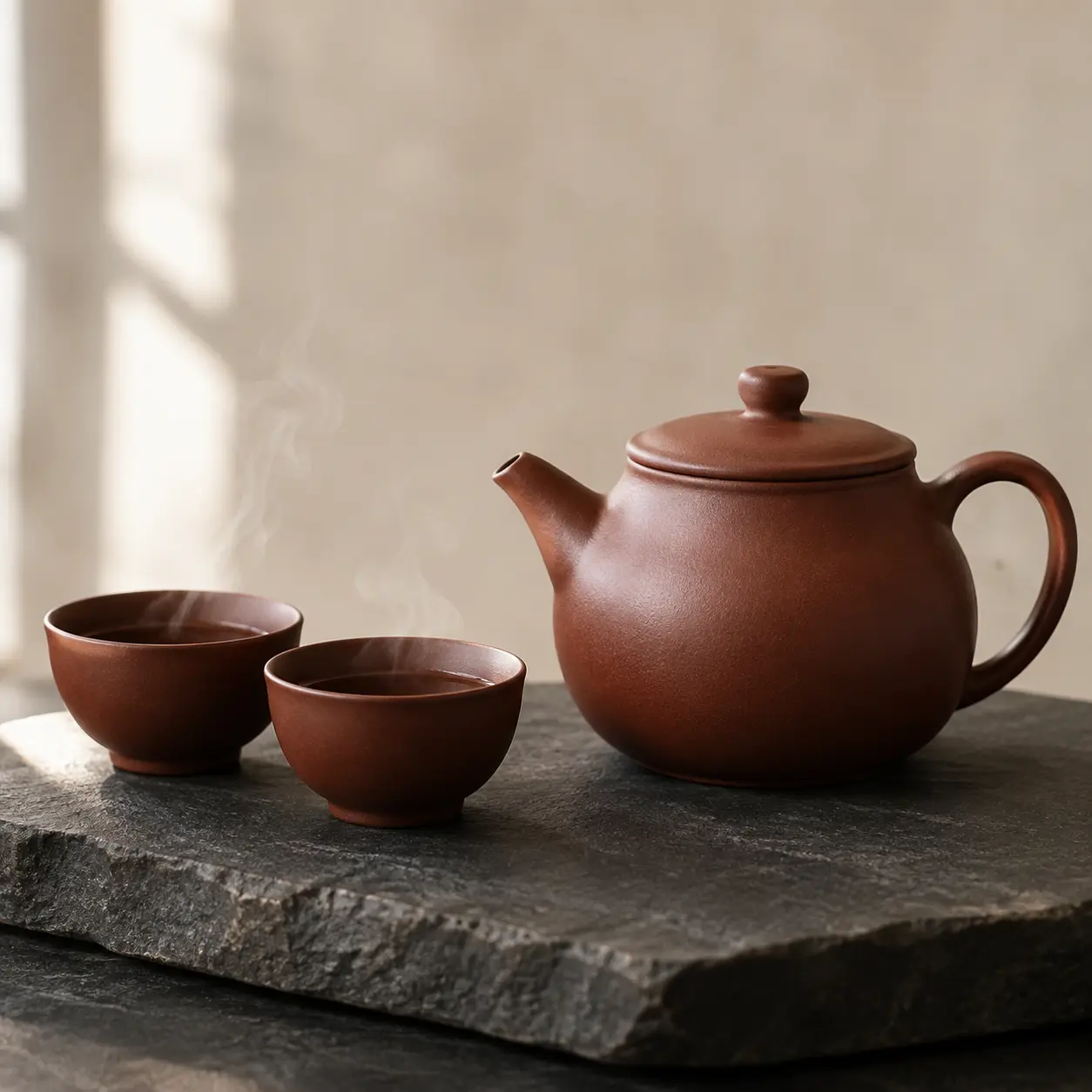
Tea ritual is not an escape from ordinary life. It is ordinary life made visible: water heating, leaves opening, hands waiting, a cup being emptied so it can receive again.
The value of a repeated sequence
Many days are shaped by reaction. A message arrives and attention follows it. A problem appears and the body tightens before the mind has named what happened. A small tea practice interrupts that pattern with a sequence you choose.
Warm the vessel. Measure the leaf. Notice the first fragrance. Pour. Wait. Empty the cup. None of these actions is difficult. Their value comes from doing them in order, without asking them to become something else.
Why the vessel matters
Form changes behavior. A smaller pot encourages several short infusions instead of one distracted cup. The fit of a lid, the speed of a pour and the balance of a handle determine whether the hand relaxes or compensates. Clay, porcelain and glaze each hold heat and aroma differently.
These qualities are physical, not mystical. Yet physical design can support an inward result. A vessel that pours cleanly invites use. Repeated use creates familiarity. Familiarity makes returning easier.
Begin with five quiet minutes
- Clear only enough space. You do not need a perfect tea room. Make room for one pot and one cup.
- Let the water finish heating. Resist filling the waiting time with another screen.
- Use the same vessel for a while. Learn its weight, temperature and pour before searching for the next one.
- End deliberately. Rinse, dry and return the objects to their place. Completion is part of the ritual.
An object that records a life
Good tea ware changes slowly. Unglazed clay may deepen with use. A silver surface may soften. A cup may carry the faint evidence of thousands of mornings. These changes are not flaws to be erased automatically. They are the record of relationship between material and habit.
The right tea object is not necessarily the rarest. It is the one whose size, balance and character make you want to prepare the next cup with care.