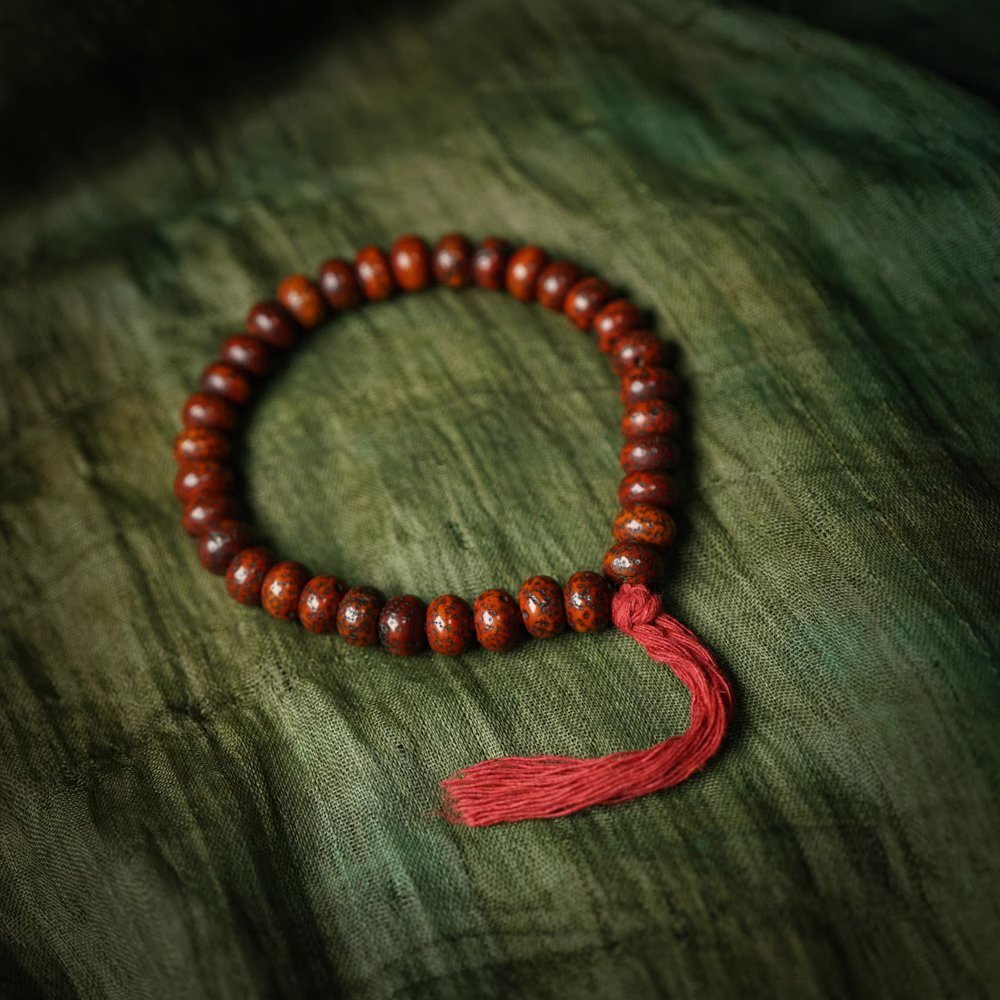
An old object can create an immediate feeling of nearness to another time. That feeling is real. But feeling is not the same thing as evidence, and serious collecting begins by respecting the difference.
What patina can tell you
Patina is the surface change created by time, environment, handling and use. On beads it may appear as darkening, polish, softened edges or irregular color. On metal it can include oxidation and wear at the points most often touched. On a vessel it may appear where fingers, water or heat repeatedly met the material.
Patterns matter. Natural wear tends to follow use: edges soften before protected recesses; thread holes may show friction; exposed metal changes differently from covered surfaces. Examination can help distinguish coherent wear from a uniformly distressed finish.
What patina cannot prove
A worn surface cannot identify a specific monastery, practitioner, family or blessing. It cannot establish an exact year without supporting context. It cannot turn a modern reproduction into a documented ritual object simply because the surface looks convincing.
This does not make undocumented objects worthless. It means their description should remain precise: “shows signs consistent with extended use” is different from “used for fifty years by a monk.” The second statement needs evidence that the first does not.
Five questions worth asking
- What is the object made from? Ask how the material was identified and whether testing or specialist inspection exists.
- What condition is it in? Repairs, replacement threads, missing components and later alterations belong in the record.
- Where did it come from? “Asian,” “Tibetan style” and “from a private collection” describe very different levels of knowledge.
- Which claims are documented? Age, maker, blessing and previous ownership should not be bundled into one vague promise.
- What remains unknown? An honest blank is more valuable than a beautiful invention.
Building an object folio
A useful record begins with photographs, measurements, material, weight and condition. It then separates known source information from estimated period and traditional symbolism. Receipts, certificates, maker marks, correspondence and previous catalog records should travel with the object whenever possible.
The purpose is continuity. Years from now, another person should be able to understand what was known when the object changed hands—and what was not. That is how a private possession begins to become a responsible collection.
Meaning does not require exaggeration
An object can become spiritually important because of the life you live with it, even when its earlier history is incomplete. Truth does not reduce meaning. It gives meaning a stable place to stand.